Zum Hauptinhalt springen
News ·

Applications of Digital Signage: Where Digital Screens Are Worth It

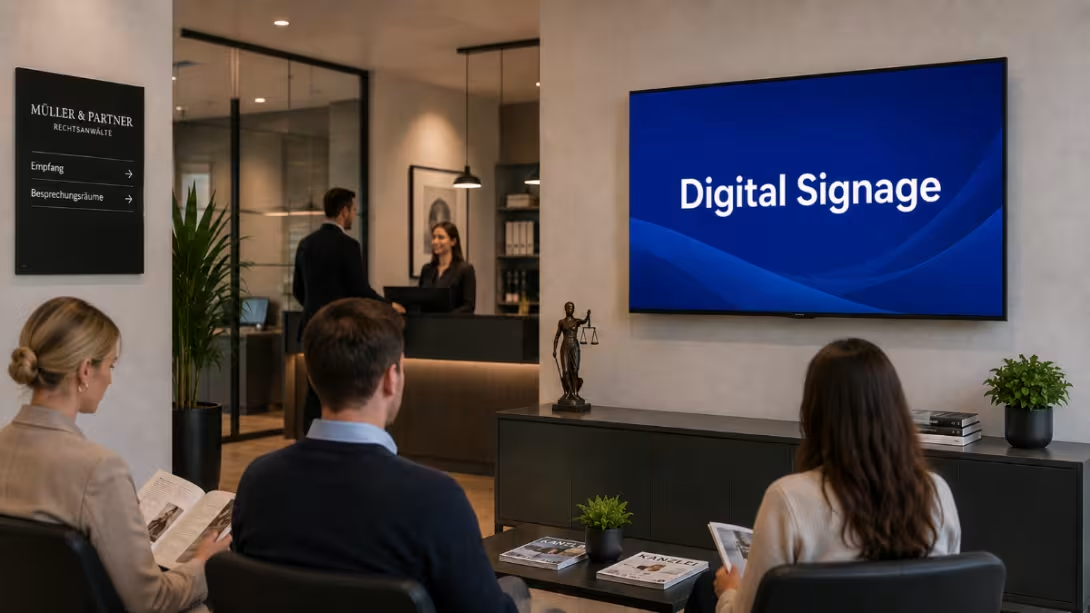
Digital signage can be used in the reception area as well as in the waiting room

Digitalization has fundamentally changed the way information is shared in public and business settings. Under the term “digital signage,” dynamic displays are increasingly replacing the static posters and signs that used to be seen in these spaces. The applications are diverse, ranging from engaging customers in retail settings to internal communication within companies.

But in which industries is the use of digital signage software particularly beneficial, and what specific tasks do these systems perform there? This article provides an overview of the most important areas of application.

An Overview of the Most Important Areas of Application

1. Healthcare and Law Firms: Waiting Room TV

In doctors’ offices, clinics, or heavily frequented government offices, waiting times are often part of daily life. A strategically placed information system can significantly reduce the perceived waiting time for visitors.

By using specialized waiting room TV software or digital signage software, you can combine current practice news, health tips, or organizational notices with entertaining content such as news and weather reports. This not only provides a distraction but also reduces the workload for front desk staff, as frequently asked questions are answered in advance via the screen.
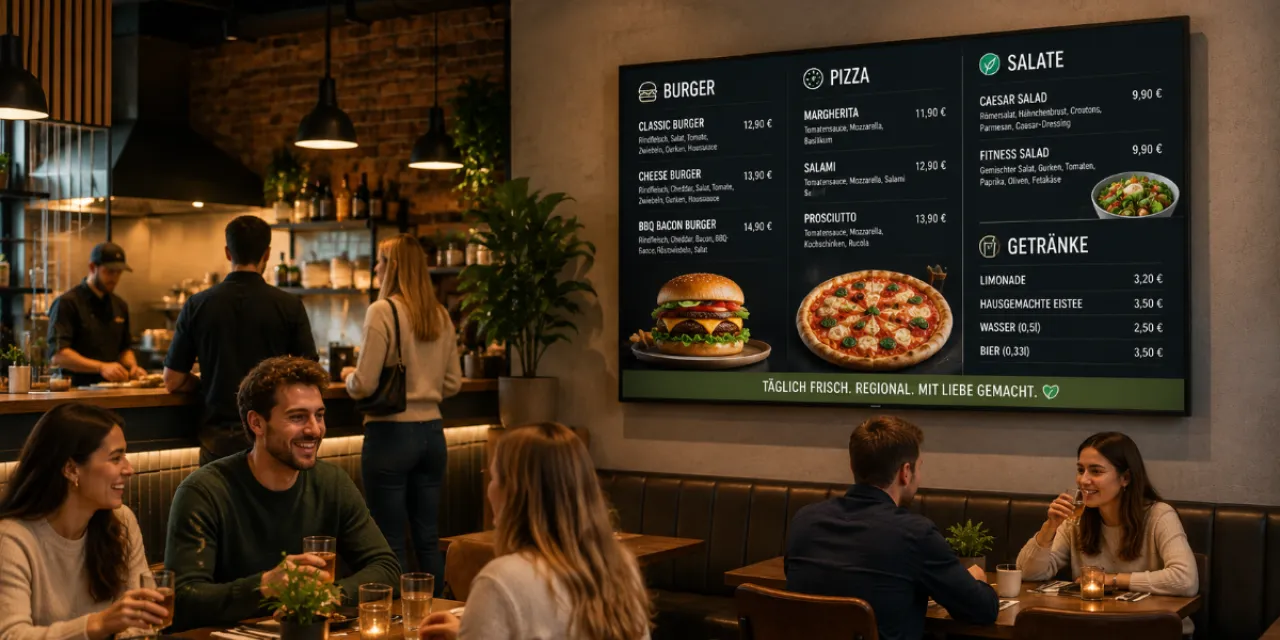
A digital menu board featuring burgers and pizza in a restaurant

2. Retail and Real Estate: Storefront TV

In traditional point-of-sale (POS) settings, the primary goal is to capture the attention of passersby and trigger impulse purchases. However, static displays quickly fade into the background in the street scene.

Modern storefront TV software transforms glass surfaces into dynamic advertising spaces that can be used around the clock. Retailers and real estate agents use this form of digital signage to present offers, product videos, or high-resolution property listings flexibly and tailored to the time of day. Since moving images are given higher visual priority than print media, this allows for a targeted increase in foot traffic within the store.

3. Hospitality and Corporate Settings: Reception and Welcome Screens

First impressions matter—this holds true for hotel lobbies as well as the entrance areas of corporate headquarters. Digital displays welcome guests and immediately convey a modern image. Using software, personalized welcome messages for business partners or event attendees can be displayed on a welcome screen. Screens in the reception area also frequently serve as digital wayfinding tools, guiding visitors to conference rooms, guest rooms, or specific departments.

4. Food Service: Digital Menu Boards

In restaurants, cafés, and especially in chain restaurants, menus and prices need to be easily adaptable. Digital menu boards are increasingly replacing traditional chalkboards. This allows restaurant owners to switch from the breakfast menu to the lunch menu right on time at noon without having to make any physical changes. Additionally, seasonal promotions or remaining stock of dishes can be specifically advertised to drive sales.

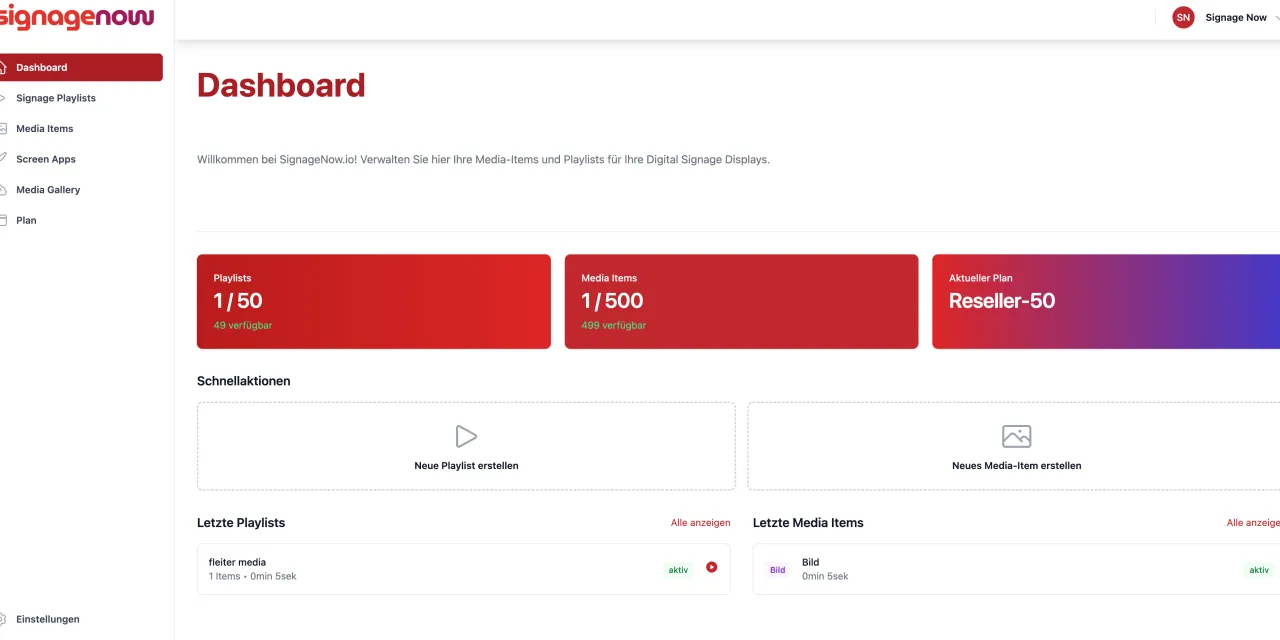
The dashboard of the SignageNow digital signage cloud software

Technical Implementation: What Matters in Software

Regardless of the application, every modern system relies on the interaction between hardware (e.g., a smart TV) and robust digital signage software. Whereas in the past, complex servers and error-prone mini-PCs had to be installed behind every monitor, today’s solutions rely on cloud-based architectures and streamlined apps.
 

One example of this technological development is the SignageNow platform. To secure screens in public spaces and simplify management, the solution provides a dedicated player app in the Google Play Store.
 

With this type of digital signage software, playlists can be controlled directly via any smart TV. Security features such as a password-protected hotel mode (kiosk mode) prevent unauthorized tampering with screens in public spaces—such as in waiting room TVs or storefront windows. Content control and updates are handled entirely via a browser-based system through the cloud, allowing businesses to coordinate their visual communications regardless of location.

Modern Communication for Every Application

Whether in a waiting room, a storefront, or a restaurant—digital signage offers a flexible solution for nearly every industry. Thanks to modern digital signage software, getting started is now simple and cost-effective. Businesses can save on printing costs and time while simultaneously capturing the attention of their target audience. Future-proof digital display software is the ideal foundation for modern communication.

Want to learn more about SignageNow? No problem.

Learn more about our digital signage software and prices here.